Thursday, March 31, 2011

Rana shooting begins today!

Shooting for Superstar Rajinikanth’s Rana with KS Ravikumar began today at AVM studios. It was a simple affair without much fanfare considering that it is a Rajinikanth film. The leading lady Deepika Padukone is very happy to be a part of the Superstar's movie. She will be providing the glam quotient in Rana. This movie will be a joint venture between Eros International and Ocher Studios.

KS Ravikumar has collaborated successfully with Rajini previously with Muthu and Padayappa both going on to become super duper hits. The expectations are soaring as the director is considered by many to be the King of commercial cinema while Rajini is the Superstar.

Floods strand tourists

More than 200 Australian travellers have been stranded in southern Thailand as mudslides and floodwaters claimed more than a dozen lives in eight provinces.

Australians were among tourists isolated on the resort island of Koh Samui, where flooding closed the airport and heavy seas halted ferries.

Thai media reported that a massive mudslide on Wednesday in the mainland province of Krabi left up to 15 people dead, while the Royal Thai Navy led the rescue of tourists (left) from the flood-ravaged island of Koh Tao in nearby Surat Thani province.
Advertisement: Story continues below

Further landslides and possible flooding are expected in the tourist destinations of Phuket, Krabi, Phang-nga and Nakhon Si Thammarat.

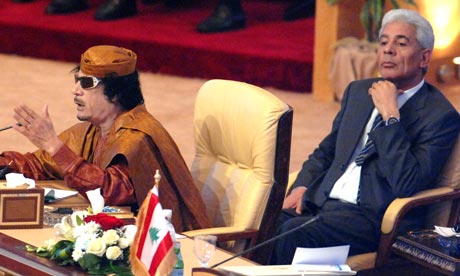
Libya foreign minister Moussa Koussa must face atrocities trial, rebels declare

Libya's rebel leadership has called for Moussa Koussa, the former Libyan foreign minister who has defected to the UK, to be returned for trial for murder and crimes against humanity after Muammar Gaddafi is toppled.

Mustafa Gheriani, a spokesman for the revolutionary council in its de facto capital, Benghazi, said that the rebels were not bent on revenge against the regime's officials but that some of Gaddafi's closest associates "have a lot of blood on their hands" and must stand trial.

The British foreign secretary, William Hague, has said that Britain is not offering Koussa immunity from prosecution. Hague called for other regime figures to abandon Gaddafi.

Gheriani alleged that Koussa had been partly responsible for assassinating opposition figures in exile, murderous internal repression and the Lockerbie plane bombing.

"We want to bring him to court," Gheriani said. "This guy has so much blood on his hands. There are documented killings, torturing. There's documentation of what Moussa Koussa has done. We want him tried by Libyan people. I believe once we have our government 100% in control in Libya, things are normalised, we want him tried here. I think international law gives us that right."

Gheriani said it was up to Britain to decide whether to arrest Koussa in the meantime. Koussa's arrival in London was evidence that Gaddafi's regime was "starting to crumble". He expected other senior officials to follow.

"He is a very, very major person to defect. Gaddafi trusted him more than some of his sons. Now Gaddafi doesn't even trust his own people any more," Gheriani said.

Gheriani said a senior military official in Kufra, Colonel Saleh al-Zaroug, had defected to the rebels. He had served in an army division commanded by one of Gaddafi's sons. The defection was impossible to confirm.

Hague said Koussa was not being offered any immunity from British or international justice. He had come to the UK on a private plane from Tunisia having left Libya of his own free will. "Gaddafi must be thinking to himself: 'Who will be the next to walk away?'" Hague said.

It would not be "helpful to advertise" whether other senior members of the regime planned to quit, Hague said, but he believed it was likely that many opposed Gaddafi's actions. He added that Koussa was in a secure place in the UK and talking voluntarily to British officials, including staff at Britain's Tripoli embassy now based in London.

Koussa's defection provides Britain with an unparalleled source of intelligence on the state of the Libyan ruler's inner circle. But his arrival in the UK has also led to expectations that he will be questioned about his possible involvement in or knowledge of atrocities including the Lockerbie bombing and the murder of PC Yvonne Fletcher.

Koussa was expelled from the UK in 1980 and became the head of Libyan foreign intelligence for 15 years, including the period of the Lockerbie bombing, which happened in 1988. He has always denied Libya was involved.

Jack Straw, a former foreign secretary, has described Koussa as a key player with a "fundamentally important" role in negotiations to bring Libya back into the international fold. "Moussa Koussa's apparent defection, certainly his unscheduled visit here, will be a very important factor in just adding to the weight against the Gaddafi regime and tipping the balance against him," Straw told the BBC. "From a distance, what's clear is that there is unlikely to be any military victory for either side. So it does depend on which side psychologically collapses."

Alongside Koussa's defection, it has emerged that Barack Obama signed a secret government order authorising covert US help to the Libyan rebels.

Opposition fighters are trying to recover some of the territory retaken by a government counterattack that has again brought Gaddafi's forces within striking distance of Benghazi.

The revolutionary leadership has called for more of the air strikes that allowed it to surge towards Gaddafi's home town of Sirte. But after their tanks and artillery were destroyed by the coalition, government troops switched tactics, using armoured pickup trucks to outflank and ambush the ragtag opposition forces.

Rebels trying to recapture the town of Brega came under rocket and mortar fire early on Thursday.

Libyan rebels 'too weak' to defeat Gaddafi

THE Libyan rebels are so poorly organised that they cannot defeat Muammar Gaddafi without arms or training, British official sources say.

British Prime Minister David Cameron admitted his government was considering arming them following talks in London with Libyan opposition leaders, despite having previously indicated this might not be possible under the terms of arms sanctions imposed on Libya.

Concern is growing after rebel forces were forced to retreat again and surrendered several towns in the face of heavy resistance from troops loyal to the regime.
Advertisement: Story continues below

However, there are fears that any move to arm the rebels could lead to ''mission creep'', dragging Western ground forces into the civil war.

A military stalemate is now a real possibility, partly as both sides are struggling to re-equip their forces.

While the regime is thought to be ''hurting more and missing more'' because many of its heavy weapons have been destroyed, the rebels could struggle to take advantage because of their own problems. They do not have a supply chain or logistical mechanisms.

It is understood that Libyan opposition leaders have requested anti-tank weapons and other equipment, which could be provided by a Middle Eastern country, such as Qatar, in return for oil.

Mr Cameron told the House of Commons: ''It is an extremely fluid situation, but there is no doubt in anyone's mind the ceasefire is still being breached and it is absolutely right for us to keep up our pressure under UN Security Council [resolution] 1973.''

A British defence source insisted there had been ''no request for ground forces'' and the government had ''no intention'' of providing ground forces.

On Wednesday the influential chairman of the US House of Representatives' intelligence committee said he opposed supplying arms to rebels.

Republican Mike Rogers said: ''We need to understand more about the opposition before I would support passing out guns and advanced weapons to them.''

His remarks came after US admiral James Stavridis, supreme allied commander-Europe for NATO, told Congress that while opposition leaders appeared to be ''responsible men and women'', there were ''flickers in the intelligence'' of potential ties to al-Qaeda.

British military sources said air strikes on arms dumps had left the regime ''incredibly stretched'', but Colonel Gaddafi's forces were still able to ambush rebels outside the leader's home town of Sirt. The rebels quickly retreated but were outflanked in the desert.

The towns of Nawfaliya, Bin Jawad and Ras Lanuf fell in quick succession. The rebels showed no sign of trying to hold the next town, Brega, but carried on towards Ajdabiya, where some regrouped. TELEGRAPH, AGENCIES

Indian census results: 1.21 billion people or or 17 percent of world population

NEW DELHI — India is now home to 17 percent of the world’s people as its population climbed to 1.21 billion this year, though growth actually slowed for the first time in 90 years, census officials said Thursday.

The South Asian nation — second only to China in number of people — added 181 million in the past decade, said C. Chandramouli, the census commissioner. That increase alone is nearly the entire population of Brazil

United Nations projections show that India could overtake China and its 1.34 billion people as the world’s most populous nation by 2030, though Chandramouli said a more rigorous analysis of data would be needed before India made its own projections.

India’s population is now nearly equal to the combined populations of the United States, Indonesia, Brazil, Japan, Bangladesh, Pakistan, he said.

Yet, the 17.6 percent increase was down from 21.5 in the last count a decade ago. The last time India showed slowing in population growth was in the 1921 census.

The numbers released Thursday were preliminary and official figures and analysis weren’t expected to be released until next year.

The census, India’s 15th since 1872, was a mammoth effort spread out over a year. It involved 2.7 million census-takers who surveyed some 300 million households, noting for the first time whether people live in basic huts or concrete structures, have electricity and access to toilets and if they have spent any time in schools.

The questions will help administrators develop policies and set budgets for a nation where 800 million people live in poverty.

Almost all residents, regardless of nationality, are included in the count, even those imprisoned like Pakistani Ajmal Kasab, who is on death row for his role in the 2008 Mumbai terror attacks. Millions of homeless were also counted.

The initial numbers show a decline in the number of children under the age of 6, down 5 million since 2001 to 158.8 million. They also indicate a continuing preference for male children over females in a country where female infanticide is still common and the government has banned doctors from revealing the sex of unborn children.

A gender breakdown among children showed fewer girls than boys are being born or surviving, with 914 girls for every 1,000 boys under the age of 6, compared to 927 for every 1,000 in the last census.

“This is a matter of grave concern,” Chandramouli said.

Indians continue to favor sons over daughters mostly because of the enormous expenses involved in marrying off girls. Even the poorest families are often likely to go into debt arranging marriages and paying elaborate dowries to their daughter’s new family. Hindu custom also dictates that only sons can light funeral pyres.

“Whatever measures that have been put in over the last 40 years has not had any impact on child sex ratio and therefore that requires a complete review,” India’s Home Secretary G.K. Pillai said.

The overall sex-ratio showed a marginal improvement, with 940 women counted for every 1,000 men compared to 933 in the last census.

The census also showed that the literacy rate went up to 74 percent nationwide for people aged 7 and older, from about 65 percent in the last count.

Copyright 2011 The Associated Press. All rights reserved. This material may not be published, broadcast, rewritten or redistributed.

DMDK chief Vijayakanth assaults party worker

Chennai:  Actor-turned-politician Vijayakanth, who is also the chief of DMDK, has stirred up a controversy after he was seen allegedly assaulting his party candidate at an election rally in Tamil Nadu.

Vijayakanth, whose DMDK is a constituent of the Jayalalithaa's AIADMK-led alliance, allegedly beat up his Dharmapuri candidate in full public glare while canvassing votes from an open vehicle.

The victim was in charge of the public address system at the poll rally. Vijayakanth allegedly hit him when the microphone failed.

The entire episode was captured in a video that was later aired on his Captain TV channel.

A defiant Vijayakanth later said at an election rally that there was nothing wrong in what he did and that whoever he beat up would become a Maharaja later.

The ruling DMK, meanwhile, slammed the actor for the incident and said, "The incident reflects the poor leadership of the party".

Wednesday, March 30, 2011

Indian actor Shiney Ahuja jailed in rape case

Award-winning Bollywood actor Shiney Ahuja has been sentenced to seven years in prison for raping his maid.

The actor was found guilty by a special fast-track court in the Indian city of Mumbai (Bombay). He has maintained his innocence throughout the trial.

His lawyer said he would appeal against the sentence.

Ahuja was arrested in June 2009 and charged with rape, criminal intimidation and wrongful confinement. He was granted bail in October.

But the court ordered the actor to stay away from Mumbai while on bail.

Judge PM Chouhan pronounced Ahuja guilty on Wednesday despite the 20-year-old victim withdrawing her allegation of rape last year.

She said she was told to complain to police by another woman who had got her the job with the actor.

Ahuja is seen as an up-and-coming actor who has made an impression in Bollywood's independent cinema scene.

He has acted in films such as Life in a Metro and Gangster, and worked with a number of leading directors.

He won several awards for his 2003 debut in the critically acclaimed film Hazaaron Khwaishein Aisi.

 
Design by Free WordPress Themes | Bloggerized by Lasantha - Premium Blogger Themes | Grocery Coupons