Monday, April 4, 2011

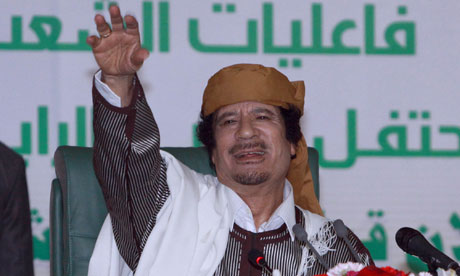
Libya's bright new dawn

Sitting at a cafe overlooking the second-century Roman arch of Marcus Aurelius, I am basking in the sun. In the nearby bazaar, pedlars shout their wares and customers bargain with the shopkeepers. Young Libyans sip their mint tea and the call to midday prayer beams out from several minarets.

First impressions of Tripoli can be deceiving and things aren't quite as serene as they seem. People talk of corruption, lack of opportunities, frustration and a chokehold on expression but they are wary of who may be sat on the adjacent table.

Opinions about the government or its projects are whispered in hushed voices. Officials are not mentioned by name if possible, for fear of being overheard by eavesdroppers, especially where Gaddafi and his family are concerned. He-Who-Must-Not-Be-Named from the Harry Potter series springs to mind. Libyans, young and old, long for freedom of speech, freedom of expression, freedom of thought.

Many Libyans like myself have been fortunate enough to observe these freedoms in practice in the west and to some extent in certain other Arab countries. But many Libyans are not so fortunate.

On my countless visits to Libya I have experienced firsthand the social, civil, political, education and health "systems": they basically do not exist. During his reign in power, Gaddafi has intentionally dismantled all civil institutions. Libyans have suffered as a result, while Gaddafi and his followers have reaped the financial benefits of the country's rich natural resources in what can only be described as the most successful mafia operation of the past four decades.

I once spent two months working in the largest hospital in Libya – Tripoli Medical Centre. I can only describe my experience there as chaos. This was the so-called beacon of the revolution, the flagship hospital, the largest, most progressive hospital with all of the latest facilities that set the standards in healthcare for Libyans; the reality is of nurses unavailable to tend to patients, nonexistent daily ward rounds, multimillion dollar scanners lying unused in locked rooms.

On one occasion, as I observed operations in the operating room, a man would casually walk through in jeans, a scruffy shirt and slicked back hair with a cappuccino in his hands and start a conversation as if he was in Starbucks. No wonder those that can afford it opt for medical treatment in countries like Tunisia, Jordan or even Europe.

Driving along the main coastal highway in Tripoli, I would often visualise the untapped potential along this stretch of the Mediterranean. My friends and I would often reflect on the lack of development of the sprawling beaches. I would reminisce about places I have been fortunate enough to visit – the haute couture of Beirut, the chic of the Côte d'Azur and the buzz of Jumeirah Beach Road in Dubai.

The images of Tripoli in the 1950s, with its Italian colonnades and clean streets, could not be further from the mayhem and disorganisation that are the streets of the city today. It pains me to see that not only is there a lack of progress in Libya, but that the country is actively being decayed by the pathogen that is the regime.

Libyans are idealists. Any hopes, ambitions or aspirations that they have had for the past four decades have been systematically crushed. Dreams have been shattered. The 17 February revolution has blown a breath of fresh air into all Libyans – whether they are in Libya itself or the Libyan diaspora dotted around the world. It is the dawn of a new era. We are now realising that the Libya that our parents could not provide for us is rapidly becoming a reality.

There is a rich culture, heritage, music, history and arts that has been locked away for decades – the regime did not allow the people to freely express themselves using these valuable tools but there is a gripping realisation that these important parts of Libyan identity are even more valuable than the much-debated black gold that lies beneath its soil.

Issues of tribal allegiances, "east versus west Libya", ethnic groups and civil war have all been grossly overstated. Libya is not homogenous; Libya consists of many ethnic groups, religions, languages and tribes. Arabs, Bedouins, Tuareg, Amazigh, Muslims, Christians, Jews – we do not necessarily share the same customs and traditions but in a sick twist of fate, if there is one thing Gaddafi and his family have achieved, it is the unification of the Libyan people and the rest of the world in their desire to rid the earth of them.

Japanese Nuclear Plant Starts Pumping Millions of Gallons of Radioactive Water Into Pacific

TOKYO -- Workers were pumping more than 3 million gallons of contaminated water from Japan's tsunami-ravaged nuclear power complex into the Pacific Ocean on Tuesday, freeing storage space for even more highly radioactive water that has hampered efforts to stabilize the plant's reactors.

The government has also asked Russia for a ship that is used to dispose of liquid nuclear waste as it tries to decontaminate the Fukushima Dai-ichi nuclear complex, whose cooling systems were knocked out by the magnitude-9.0 earthquake and tsunami on March 11. The plant also plans to bring in a floating storage facility.

But these other storage options have been slow to materialize, so the pumping began late Monday. It was expected to take about two days to get most of the less-radioactive water out.

"It was inevitable," Chief Cabinet Secretary Yukio Edano told a news conference Tuesday. "The measure was to prevent highly radioactive water from spreading. But we are dumping radioactive water, and we feel very sorry about this."

Radioactivity is quickly diluted in the ocean, and government officials said the dump should not affect the safety of seafood in the area.

But the stress of announcing more bad news appears to wearing on officials with the plant's operator, Tokyo Electric Co. One official teared up and his voice began shaking as he gave details at a news conference near the plant.

The crisis has unfolded as Japan deals with the aftermath of twin natural disasters that devastated much of its northeastern coast. Up to 25,000 people are believed to have died and tens of thousands lost their homes.

Since the disaster, water with different levels of radioactivity has been pooling throughout the plant. People who live within 12 miles (20 kilometers) have been evacuated and have not been allowed to return.

The pooling water has damaged systems and the radiation hazard has prevented workers from getting close enough to power up cooling systems needed to stabilize dangerously vulnerable fuel rods.

On Saturday, they discovered a leak where radioactive water was pouring into the ocean.

Radiation exceeding the legal limit has been measured in seawater over the past few weeks, though calculating the exact contamination has vexed TEPCO. Japan's nuclear safety agency ordered the utility last week to reanalyze samples; new results released Monday showed unchanged or lower levels of radiation than previously reported.

The less-radioactive water that officials are purposely dumping into the sea is up to 500 times the legal limit for radiation.

"We think releasing water with low levels of radiation is preferable to allowing water with high levels of radiation to be released into the environment," said Junichi Matsumoto, a TEPCO official.

The need to make room for the highly radioactive water became more urgent when TEPCO discovered the extent to which it was leaking into the ocean, Matsumoto said.

Workers need to get rid of the highly radioactive water, but first they need somewhere safe to put it. Much of the less-radioactive water being dumped into the sea is from the tsunami and had accumulated in a nuclear waste storage building.

The building is not meant to hold water, but it's also not leaking, so engineers decided to empty it so they can pump in the more-radioactive water. The rest of the water going into the sea is coming from a trench beneath two of the plant's six reactors.

Also Monday, a spokesman for the Russian nuclear agency Rosatom, Sergei Novikov, told reporters that Japan had requested Russia send it a vessel used to dispose of liquid nuclear waste from decommissioned submarines.

Novikov said Moscow was awaiting the answers to some questions before granting the request.

More water keeps pooling because TEPCO has been forced to rely on makeshift methods of bringing down temperatures and pressure by pumping water into the reactors and allowing it to gush out wherever it can. It is a messy process, but it is preventing a full meltdown of the fuel rods that would release even more radioactivity into the environment.

"We must keep putting water into the reactors to cool to prevent further fuel damage, even though we know that there is a side effect, which is the leakage," said Hidehiko Nishiyama, a spokesman for Japan's Nuclear Safety and Industrial Agency. "We want to get rid of the stagnant water and decontaminate the place so that we can return to our primary task to restore the sustainable cooling capacity as quickly as possible."

Engineers have been using unusual methods to try to stop the more highly radioactive water from leaking into the sea.

Yemenis hold largest protest yet against leader

SANAA, Yemen –  Hundreds of thousands of Yemenis packed a square in the capital and marched in villages and cities across the nation on Friday in what appeared to be the largest demonstrations in more than a month of demands the country's longtime ruler Ali Abdullah Saleh step down.

Youth leaders said they planned a march in the direction of the heavily guarded presidential palace.

Many mosques in the capital shut down — a move unprecedented for Friday, the Muslim day of prayer — as worshippers and clerics streamed to the square outside Sanaa University.

Protesters filled the plaza and spilled out along three adjoining streets. Previous demonstrations have taken up the square and at most two of the streets that feed into it.

The demonstrators set up tents and hung up posters of young men who were fatally shot by government forces during previous protests.

In a parallel demonstration, tens of thousands of government supporters rallied to al-Sabaeen Square outside the presidential palace, where Saleh made a brief speech, telling them, "With my blood and soul, I redeem you," a common chant in the Arab world.

Saleh has ruled Yemen for 32 years. He warns that if he is ousted, Yemen will descend into chaos, boosting the al-Qaida presence already in the country.

On Friday evening, two local newspaper reporters and a television cameraman were detained by security forces, according to Gamal Anaam, member of the Yemeni journalists' union. A security official declined to comment.

Security forces also seized a close aide to Maj. Gen. Ali Mohsen al-Ahmar, a top military commander and longtime confidant of the president who joined the opposition. The aide, Abdul-Ghani al-Shimiri, who is al-Ahmar's political and media assistant, was detained outside his Sanaa home Friday and is being held by the National Security agency, according to a statement by al-Ahmar's office.

Al-Ahmar's was the most significant in a wave of defections from Saleh's regime by military commanders, ruling party members and others, swelling the ranks of the opposition and leaving him isolated. Al-Ahmar, commander of the powerful 1st Armored Division, deployed his troops at the central square, where demonstrators gather.

State Department spokesman Mark Toner said the U.S. was concerned about the situation in Yemen but insisted counterterrorism cooperation was continuing between the two countries.

"It's not something that's directed at one person," Toner said, describing counterterrorism efforts as the top U.S. priority in the country. "It's ongoing cooperation with the government of Yemen."

Still, he said the U.S. wanted resolution to the unrest in Yemen and stressed that Saleh has made concessions. Demonstrators also have made movements, "but they need to obviously come together and forge a way forward," he said.

Saleh escalated his confrontation with the rapidly expanding uprising a week ago, taking on emergency powers that give him a freer hand to quell protests. Parliament, which is packed with his supporters, passed a 30-day state of emergency that suspends the constitution, bars protests and gives security forces far-reaching powers of arrest.

In another development, plainclothes militias were seen taking up positions around the capital. An army officer said the militias are under the command of Saleh's son and are designed to be deployed quickly to trouble spots. He spoke under condition of anonymity because of the sensitivity of the issue.

In a failed attempt to appease the protesters, Saleh offered not to run again when his current term ends in 2013. He then offered to step down by the end of this year and open a dialogue with the leaders of the demonstrators.

Protesters rejected all his offers, furious after his security forces shot dead more than 40 demonstrators in Sanaa last month.

On Friday, there were anti-Saleh protests in at least 14 other provinces around the country. Witnesses said hundreds of thousands of people attended demonstrations in the provinces of Aden, Taaz, and Hadramout.

The Sanaa crowd was supported by soldiers with anti-aircraft guns and Kalashnikov rifles, who set up half a dozen checkpoints around the square to prevent intrusions by president's loyalists.

Protesters, who have called for a "Friday of Salvation," raised black cards while chanting "Ali Leave!" Women and children, their faces painted in the colors of the Yemeni flag, or the word "Leave," joined the protests.

Cleric Taha al-Moutawkel told the crowd during afternoon prayers that Saleh's regime was already collapsing, and he vowed that the protests will remain peaceful.

"Whenever they threaten us, we will face their tanks with our bare chests," he said. "Saleh is over and he knows that, but he is betting that people will eventually run out of patience."

He said that even if the West backs Saleh, the people will keep pushing for his ouster.

"If the president's popular legitimacy plunges, no any power in the West or the East can bring him back," he said.

The demonstrators blame Saleh for mismanagement, repression and the fatal shootings of protesters. They say they will not relent until he goes.

Another pilot arrested for using forged marksheets

New Delhi:  One more pilot has been arrested in the capital for allegedly using forged marksheets to procure a licence from the country's airline regulator.

A senior Delhi police official said Abhinav Kaushik from private airline Indigo, has been arrested for using forged marksheets to procure a licence from the Directorate General of Civil Aviation (DGCA).

Delhi Police had last month arrested two pilots for the same offence while two others were apprehended in Jaipur.

The city police had arrested Parwinder Kaur Gulati of Indigo and J K Verma of Air India while their Jaipur counterparts had apprehended Anoop Choudhury and Amit Moondra of Spice Jet for the similar offence.

In the wake of the fake pilot scare, licenses of 3,000 to 4,000 pilots are being scrutinised by the DGCA.

The fake pilot licence issue assumed a worrying proportion after Gulati - a commander with IndiGo was found faking her marksheet to obtain Airline Transport Pilot Licence (ATPL), which allows a pilot to become the commander of an aircraft.

Gulati was arrested by police after the DGCA filed a complaint against her, but was later released on bail.

Moderate quake rocks India-Nepal border region

NEW DELHI - A MODERATE 5.7-magnitude earthquake shook the Nepal-India border region on Monday with tremors felt as far away as the Indian capital of New Delhi.

The epicentre of the quake was in the border region between Nepal and India, a seismologist at the Indian Meteorological Department told AFP.

The quake struck at a depth of 10km, he said.

'It was a moderate quake... with a shallow to moderate focal depth,' said the official, who asked not to be identified.

No damage or casualties were immediately reported.

The tremor was also felt in two towns in far western Nepal, Dhangadi and Mahendranagar, Nepal's private Avenues Television reported. -- AFP

Working Mother - Easing the guilt

It's not easy being working mother. Not only do you have to deal with the anxiety of being separated from your child, you also have to put up with judgement from wider society about what makes a good mum.

Then there are the (ungrounded) fears that childcare is damaging to children or that a child will love their nanny more than you.

But while mother guilt may be part and parcel of parenthood, there are ways to lessen the burden you might be feeling.

Remember why you work
Go back to the thought process you went through while making the decision to return to work. Was it to help pay the mortgage? To send the children to a good school? To keep your qualifications up-to-date? To gain some 'me time' or save up for a dream vacation? There is no 'right' answer, but the point is, at some point you made a logical decision that working was the best decision for your family. Have faith that your decision was the right one.

Are you happy with your child's current carer?
Underlying feelings of guilt may be doubt about the quality of care your child is receiving. If you feel that their current environment is not the right one, perhaps it's time to think of different options, such as the one-to-one care that a nanny provides. Or if you have some concerns about your current nanny, now is the time to book a meeting to discuss those concerns. No-one else will care for your child exactly the way you will but that's OK. They will have other skills and attributes that your child will enjoy. Even for a working parent, your child's happiness is your number one priority.

Re-evaluate your working conditions
Perhaps it's not the job but the conditions making work unenjoyable for you. Australian laws state that employers must seriously consider requests for flexible work arrangements from staff members who hold parent or carer responsibilities. Could your working day start and finish earlier, or perhaps you could work four longer days instead of five shorter ones? Many workplaces also allow an employee to work from home at least one day per week. For parents of young children, flexible work hours may be worth a small drop in income.

Make weekends fun
Many working parents find that their weekends are quickly swallowed up by an avalanche of cleaning duties, shopping errands and garden maintenance, adding further guilt about the time spent having fun with their children.

Is there some time each weekend to lock away as non-negotiable family time? Perhaps it's a special Sunday morning pancake-fest, or board games after Saturday night dinner. Having a few special rituals each week helps families to bond.

Some jobs, like watering the garden or washing the car, are activities every member of the family can join in and enjoy - especially if they end in a water fight!

Remember that it won't be forever
Whatever guilt you're feeling now won't last forever. Children grow up, careers change, family dynamics shift. The truth is you won't be there to witness every waking moment of your child's life. Focus instead on the positive things you bring to the family, and on being a happy and well-rounded mum. Surround yourself with positive people who support your working arrangements.

Final word goes to Life coach Gail Kauranen Jones, author of To Hell and Back . . . Healing Your Way Through Transition.

"I don't know one mother who doesn't feel guilty about the times she thinks she has failed her child," she writes.

"The key is to be able to acknowledge the feeling for what it is and to learn from it. When you let go of the guilt, you can actually be a better, more relaxed mother."

Land, job, car? India cashes in

TO THE 11 men who won India the Cricket World Cup comes the thanks of a grateful nation.

In the euphoria of India's win, it seems all 1.21 billion people in this massive country have a tribute in the form of a house, car, stadium, honorary degree or tens of millions of rupees.

These were already well-paid, well-cared-for men, each with lucrative endorsements and revered as semi-deities the length and breadth of the country. But the largesse of this ecstatic nation knows no bounds.

None of India's cricketers catch trains. And they have less need now every team member has been given a car by Hyundai (and man of the tournament Yuvraj Singh a second from Audi).

But in case the urge to ride the rails overwhelms, India's Railways Ministry has announced lifetime first-class rail passes for the team, pointing out in its press release that the players are entitled to travel in the airconditioned carriage.

A builder in Rajkot is giving each member of the squad a plot of land, including South African coach Gary Kirsten, even though he's leaving.

And Air India, which ''employs'' four cricketers as deputy managers of offices around the country, has announced they will now be promoted to managers.

''All of them are our regular employees and attend office regularly when they are not playing,'' an airlines spokesman said, without confirming whether they had come to work yesterday.

Meanwhile, a grateful real employer, the unimaginably wealthy Board of Control for Cricket in India, not to be outshone, announced a bonus of 10 million rupees ($A211,500) for each player. State governments across the country are shrewdly rediverting taxpayer dollars to India's most precious resource.

The Chief Minister of Karnataka has promised a residential plot in the capital Bangalore for each team member, and most state governments have offered their home-town players cash gifts of between 10 million and 20 million rupees.

The state of Uttarakhand has promised another plot of land or a house for adored batsman Sachin Tendulkar and captain Mahendra Singh Dhoni, and a host of players have been awarded state honours and medals.

The inscrutable Dhoni, who won the final with a towering six, is the focus of much of the munificence.

He's been recommended for an honorary doctorate by a minister from his home state of Jharkhand, while the Chief Minister of Uttarakhand has promised to build a stadium in his honour.

Famously cool under pressure, and a deeply spiritual man, Dhoni has taken the victory in stride. He appeared for photos the morning after the final with his head shaved. He politely declined to explain, but it was reported that before the tournament his guru told him to cut off his hair between 2.45am and 3am after the final as an offering.

Long-term, this victory has set the players up to make more money, through endorsements. Dhoni's asking price per product is likely to nearly double to 100 million rupees a year. Tendulkar can command 60 million rupees an endorsement.

''This team has reached a different level, the emotional connect will be huge … the rates are northward bound for most of the key players,'' sports marketing consultant Mahesh Ranka told The Times of India.

 
Design by Free WordPress Themes | Bloggerized by Lasantha - Premium Blogger Themes | Grocery Coupons