Monday, April 4, 2011

Fasting for 24 hours 'may cut your risk of heart disease and diabetes'

Regularly going a day without food may reduce your risk of heart disease and diabetes, research has suggested.

Doctors studied the health and habits of more than 200 residents in the state of Utah, where fasting for at least one day a month is a way of life for many Mormons.

X-ray scans revealed narrowing of the arteries in around 75 per cent of those who didn’t fast. In contrast, clogged arteries affected 63 per cent of those who said they often skipped meals.

Fasting also appeared to more than halve the odds of diabetes, the American College of Cardiology’s conference heard.

To ensure the results were not only due to those who fast having healthier lifestyles, the researchers carried out a second study on people who were not regular fasters.

They did not eat or drink anything other than water for 24 hours and underwent a series of health checks. They were also monitored while eating normally.

The tests revealed fasting triggers a significant surge in human growth hormone, a hormone credited with speeding up metabolism and burning off fat.

Levels rose 13-fold in women and 20-fold in men. Shedding fat is known to cut the risk of diabetes and related heart problems.

The fasting caused levels of cholesterol to rise but they returned to normal after the fast was over.

Doctors stressed that more research is needed before fasting can be prescribed to patients.

Nutritionist Dr Emma Williams said: ‘I wouldn’t be in a hurry to commence fasting, as the precise nature by which the body reacts to it remains relatively unknown.’

Scientists to Make Heart Transplant Easier

At the University of Minnesota’s Heart Lab, experiments are going on which will make heart transplant easier and the patients won’t be required to tale anti-immunity drugs. The experiment is a major step towards the first ‘grow- your-own’ heart, and could be helpful in creating artificial liver, kidney and lungs.

It has come to light that British Doctors in 2007 grew a human heart valve by using stem cells taken from a patient’s bone marrow. And a year later, scientists grew a beating animal heart for the first time.

Dr Taylor’s team who is working at Minnesota’s Heart Lab., has already created beating hearts of rat and pig. At the American College of Cardiology’s annual conference in New Orleans the researchers told that they have created new organs using human hearts taken from dead bodies.

The scientists told that the cells were stripped from the dead hearts with powerful detergent, leaving ‘ghost heart’ scaffolds made from the protein collagen. The ghost hearts were then injected with millions of stem cells, which had been extracted from patients and supplied with nutrients. The stem cells ‘recognized’ the collagen heart structure and began to turn into heart muscle cells.

If the experiment proves successful it will be a ground-breaking invention in the field of science and technology. The biggest problem that scientists are facing is getting enough oxygen to the organ through a complex network of blood vessels.

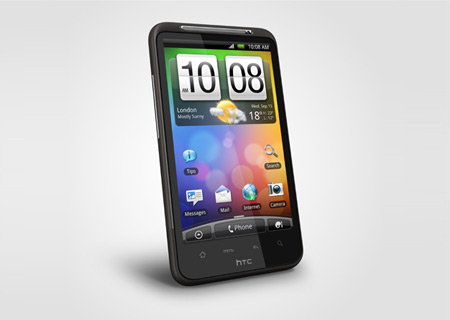
HTC Desire HD unleashed in India

With the incorporation of technologies like HD and 3D in consumer electronic products, their popularity has increased invariably. Further strengthening the stance of high definition visuals, HTC expanded its Desire series with a HD option sometime last year. After alluring enthusiasts around the globe with its enriching graphical verve, the HTC Desire HD has now arrived on the Indian shore.

Flaunting its stylish aluminum sculpture, the handset sports a 4.3-inch LCD display and SRS virtual sound. The smartphone has been embedded with an 8MP dual-flash camera which is capable of freezing high quality images and 720p HD videos. Embedded with the new HTC Fast Boot, users can make quick calls or check emails at a rapid pace. This is possible as the integration slashes the time required for completing the power-up sequence.

“We have always strived to enhance and enrich the mobile phone experience and the HTC Desire HD is a true testament of HTC’s prowess, with its stylish unibody design and outstanding features,” explained Ajay Sharma, Country Head, HTC India. “We are confident that Indian mobile phone users will value this holistic approach and HTC’s innovations in the new HTC Desire HD.”

The device has been powered by the 1GHz Qualcomm 8255 Snapdragon processor for delivering a smooth performance. It also boasts of the HTC Sense which is said to refine people’s experiences by allowing them to record, create, share and access multimedia content. This software has been also been included into the smartphone for unfolding enriching online e-reading sessions.

The HTC Desire HD can be picked from authorized HTC resellers located across the country for the price of Rs. 26, 990.

Follow-up to Storm 2 will be announced by BlackBerry in May

BlackBerry gets touchy

A new range of BlackBerry handsets to be unveiled by RIM next month will include a powerful full touchscreen phone.

The handset, provisionally titled the BlackBerry Touch, will be the successor to the partly touchscreen based Storm 2 and will run OS 6.1. An intriguing development could be that users will need a BlackBerry ID to log into the system, as opposed to the classic BBM PIN, which may make it easier to back-up, restore and share data as well as contacts in the BlackBerry Messenger.

Boy Genius Report, which has leaked pictures, claims the device is: "Thinner, faster and sexier than the Storm."

Getting down to specifics

Specifications have been rumoured to include 8GB onboard memory, 1.2GH processor and 512MB of RAM with a microSD slot for extra space. It's also expected to feature Near Field Communication or touch-based interactions including mobile payments.

The US Verizon Wireless version will be codenamed Monaco, while the global GSM will be known as Monza. Both versions won't be continuing the troublesome SurePress 'innovation' which drew complaints from critics.

Recently, RIM's BlackBerry shied away from this and shifted its focus to the tablet-world in its attempt to rival Apple's iPad 2. It plans to release the first version of the PlayBook later this year. For now though, it's all about the BlackBerry Touch and RIM is expected to make it official at the BlackBerry World conference in May 2011.

Sensex up 75 points in early trade on strong FII buying

The BSE benchmark Sensex firmed up by 75 points in early trade on Monday on persistent buying in select counters, mainly IT and tech, on the back of sustained capital inflows by foreign funds, coupled with higher Asian cues.

The BSE benchmark Sensex resumed higher at 19,473.93 and shot up further to 19,566.29 before quoting at 19,495.75 at 1015 hours, showing a net gain of 75.36 points, or 0.39 per cent, from last weekend’s level.

The NSE 50-share Nifty also firmed up by 14.60 points, or 0.25 per cent, to quote at 5,840.65 at 1015 hours.

Index heavyweight Reliance Industries (RIL) was trading firm. Wipro surged by 1.50 per cent after the company said it will acquire the oil and gas information technology practice of U.S.-based Science Applications International Corporation (SAIC).

Other gainers were Hero Honda (1.90 per cent), Infosys Tech (1.51 per cent), M&M (1.51 per cent), HDFC Bank (1.30 per cent), Jindalsteel (1.29 per cent) and TCS (1.21 per cent).

As per provisional figures, foreign funds bought shares worth Rs. 415.28 crore last Friday. FII inflow totalled Rs. 8,963.42 crore in the nine trading sessions from March 22 to April 1.

Most Asian stocks rose in early trade after a report showed U.S. jobs grew faster than forecast. The key benchmark indices in Hong Kong, Indonesia and Singapore were up by between 0.08 per cent and 1.11 per cent. However, South Korea’s Seoul Composite slipped by 0.49 per cent. The Chinese market is closed today for a local holiday.

2G scam: Telenor distances from its JV partner Unitech

Norwegian mobile operator Telenor has distanced itself from its joint venture partner –Unitech, reports CNBC-TV18.

Telenor today clarified that the CBI in its chargesheet has named Unitech Wireless and its MD Sanjay Chandra and not Telenor.

The company claimed that charges were made for a period prior to Telenor's entry and that the Norwegian made its investments after Unitech had obtained a genuine licence. It also emphasised that it has zero tolerance for corruption and will continue to fight for its rights.

Telecom investments pegged at Rs 5 lakh crore in 2012-2017

With mobile subscribers growing at the pace of over 15 million every month, the telecom sector is likely to witness huge investments to the tune of Rs 5 lakh crore in the next five years plans (2012-2017).

Of this, the two telecom PSUs -- BSNL and MTNL are expected to make investments to the tune of Rs one lakh crore during the five years to ramp up their telecom infrastructure.

Private players, on the other hand, are expected to invest Rs 4 lakh crore during the same period (2012-2017) in expanding their infrastructure.

This is contained in an internal note of the Department of Telecom which says the total investment in telecom infrastructure is pegged at Rs five lakh crore (USD 110 billion) during the 12th Plan period, starting April 2012.

The total number of telecom subscribers is projected to grow from the present 780 million to 1,200 million during the 12th Plan. About 25% (roughly 300 million) would be 3G/4G subscribers, which would require scaling up the infrastructure.

About Rs 2.85 lakh crore is estimated to be invested in rolling out greenfield 2G, 3G/4G and WiMax networks, while Rs 1 lakh crore would be required to set up an extra 200,000-odd telecom towers across the country.

The total investment in the pan-India broadband rollout is expected to be Rs 75,000 crore, while another Rs 40,000 crore will be invested in augmenting the transmission network.

 
Design by Free WordPress Themes | Bloggerized by Lasantha - Premium Blogger Themes | Grocery Coupons