Wednesday, March 30, 2011

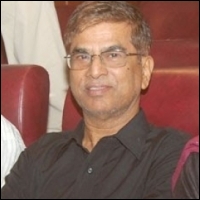
Indian actor Shiney Ahuja jailed in rape case

Award-winning Bollywood actor Shiney Ahuja has been sentenced to seven years in prison for raping his maid.

The actor was found guilty by a special fast-track court in the Indian city of Mumbai (Bombay). He has maintained his innocence throughout the trial.

His lawyer said he would appeal against the sentence.

Ahuja was arrested in June 2009 and charged with rape, criminal intimidation and wrongful confinement. He was granted bail in October.

But the court ordered the actor to stay away from Mumbai while on bail.

Judge PM Chouhan pronounced Ahuja guilty on Wednesday despite the 20-year-old victim withdrawing her allegation of rape last year.

She said she was told to complain to police by another woman who had got her the job with the actor.

Ahuja is seen as an up-and-coming actor who has made an impression in Bollywood's independent cinema scene.

He has acted in films such as Life in a Metro and Gangster, and worked with a number of leading directors.

He won several awards for his 2003 debut in the critically acclaimed film Hazaaron Khwaishein Aisi.

Team takes flight to Mumbai ASAP

COLOMBO: Kumar Sangakkara decided to waste absolutely no time and took the next immediate flight available for Mumbai with his team on Wednesday morning to be in the right atmosphere where Sri Lanka will play their third World Cup final and the second successive one.

The team arrived at Colombo's S Bandarnayake international aiport merely five hours after they finished with the semifinal here, beating New Zealand. The streets of Colombo witnessed stunning sights of celebrations throughout the night as the team packed their bags to leave on the big assignment. The much-fancied Galle Face Road in Colombo, home to the city's best five star hotels, business centres and of course the president's house, is where the locals and foreigners poured in for a night full of music and alcohol.

"For us to be in this position, to host a World Cup and for Sri Lanka to get into a final bodes well for the future of our country. Cricket has always been the panacea that healed all wounds in Sri Lanka. Whenever cricket is played, it seems as if life is back to normal," Sangakkara said after the victory.

For Sri Lanka, it became an emotional moment to be playing such a big match in front of their home crowd. Further, the fact that Muttiah Muralitharan was playing his last international home game, made the evening more eventful.

"It was a bit emotional because it was the last game we were playing in front of our home crowd. The next match is not going to be here. It was a very special moment for us and even more so because it is the last time Murali will ever play an ODI. When the magnitude of that occasion hits you, it kind of overwhelms you," the Lankan skipper said, also praising Murali for his great contribution to Sri Lankan cricket.

"Murali has no ego and he is a great team man. These kind of fairytale endings keep happening to him (also referring to 800th wicket in last Test) because he is a great human being. He has a great heart, is an honest hardworking guy and has no pretenses about him. When he is such a nice guy, good things happen to him."

Sri Lanka are certainly in the right mood and a very good frame of mind coming into the final. Sangakkara had nothing scheduled for his team on Wednesday because the team just wanted to relax and enjoy the India-Pakistan semifinal played at Mohali.

Nifty nears 5800; DLF, M&M, Dr Reddy’s, HDFC gain

MUMBAI: Indian markets extended gains for seventh straight session taking cues from positive global peers. All the sectoral indices were in the green with realty, healthcare and metals stocks leading the upmove.

"The start today will be good, spurred by encouraging global cues. India Inc. may suffer a bit in terms of productivity but there is unlikely to be any material impact on market volumes. What could have a bearing is the last minute year-end rebalancing and F&O related gyrations.

The undertone has turned around in the past few sessions. The key indices have surpassed the crucial 200-DMA levels, propelled by renewed pick-up in FII inflows. After being pessimistic on India in the first two months, they have resumed their bets in March. One has to see whether the trend persists in April or not," said IIFL report.

At 10:10 am; National Stock Exchange's Nifty was at 5,794.85, up 58.50 points or 1.02 per cent. The broader index touched a high of 5799.15 and low of 5753.90 in early trade.

Bombay Stock Exchange's Sensex was at 19327.04, up 206.24 points or 1.08 per cent. The 30-share index touched a high of 19329.56 and low of 19178.77 in trade so far.

BSE Midcap Index was up 1.22 per cent and BSE Smallcap Index moved 1.84 per cent higher.

Amongst the sectoral indices, BSE Realty Index was up 2.11 per cent, BSE Healthcare Index gained 1.44 per cent and BSE Metal Index moved 1.38 per cent higher.

DLF (2.73%), M&M (2.67%), Dr Reddy's Laboratories (2.47%), Sesa Goa (2.44%) and HDFC (2%) were the top Nifty gainers.

HCL Tech (-0.65%), Bharti Airtel (-0.65%), BPCL (-0.10%) and Axis Bank (-0.06%) were the only losers.

Meanwhile the Asian markets were witnessing buying activity. Nikkei was up 1.97 per cent, Hang Seng was gained 1.71 per cent and Taiwan Weighted moved 0.73 per cent higher.

Nifty firm near 5800; realty, auto, banks up

MUMBAI: Indian markets continued to gain momentum as investors bought stocks across the board ahead of March series F&O expiry. Rate sensitive sectors led the rally while FMCG space was marginally in the red.

At 2:10 pm; National Stock Exchange's Nifty was at 5780.55, up 44.20 points or 0.77 per cent. The broader index touched a high of 5803.15 and low of 5753.90 intraday.

Bombay Stock Exchange's Sensex was at 19271.75, up 150.95 points or 0.79 per cent. The 30-share index touched a high of 19357.10 and low of 19178.77 in trade so far.

BSE Midcap Index was up 1.07 per cent and BSE Smallcap Index moved 1.94 per cent higher.

Amongst the sectoral indices, BSE Realty Index was up 1.52 per cent, BSE Bankex gained 1.23 per cent and BSE Auto Index moved 1.16 per cent higher.

Ambuja Cement (6.78%), M&M (3.39%), SBI (2.62%), Punjab National Bank (2.46%) and Jaiprakash Associates (2.43%) were the top Nifty gainers.

Cairn India (-1.31%), HCL Tech (-1.25%), Hindalco (-1.25%), Bharti Airtel (-0.93%) and ONGC (-0.48%) were the top losers.

Market breadth was positive on the NSE with 2064 gainers against 705 losers.

Meanwhile, the European markets also moved higher in line with peers. FTSE 100 was up 0.49 per cent, CAC 40 gained 0.60 per cent and DAX moved 1.08 per cent

Deciphering Hidden Code Reveals Brain Activity

Geoffrey K. Aguirre, MD, Assistant Professor of Neurology at the University of Pennsylvania School of Medicine, says "the same math that could break into your car can be used to crack the brain's codes." It's called a de Bruijn sequence, which is a set or "alphabet" of things (letters, pictures, sounds) in a cyclic order such that every possible "word" or combination of things occurs only once. De Bruijn sequences are what mathematicians call "pseudo-random" because they appear to be a confused jumble but actually contain an underlying structure. To break into a car protected by an electronic lock with a five-digit numerical keycode, for example, a thief could try every possible combination. However, such a brute-force technique is time-consuming because it involves a great deal of repetition. But a de Bruijn sequence uses "every possible combination squeezed together," explains Aguirre. The overlapping combinations encode a pattern scientists can observe in brain activity using fMRI, revealing how nerve cells work to represent the world.

Breaking Codes in Brain Studies

This approach measures how the order of things changes brain responses. Do you see a photo of your brother differently when it follows a picture of your sister? Aguirre says, "Many neuroscience experiments use the context and order of sights, sounds, words, and feelings to reveal how the nervous system is organized"

Previous experiments have presented information to study participants in more or less completely random order. This can be inefficient and inaccurate, making it difficult to discern important patterns and correlations between stimuli and neural responses. "We use the de Bruijn sequence to design the experiment," Aguirre says. "It tells us how to present things to the subject. By presenting a series of faces in different combinations and orders, as dictated by the de Bruijn sequence, it's possible to measure the brain response to each face individually."

Beating the Blood Flow Problem

Aguirre's new algorithm for creating de Bruijn sequences also helps correct an important limitation of fMRI, which works by measuring changes in brain blood flow. "It takes a little while for the blood flow changes to catch up with the brain response," Aguirre says. "By creating these sequences in a special way that accounts for the slower blood flow response, experiments are many times more powerful than before."

"The amazing thing is the person in the experiment just sees random pictures," Aguirre notes. "But in fact, we're hiding in this seemingly random sequence a signal that's invisible to the person but can be decoded by the MRI scanner. We can measure the nerve cells' response to that hidden pattern and then use that to understand how the brain is representing information."

Aguirre's unique marriage of advanced mathematics with the latest neuroimaging techniques promises to both open up new areas of research and improve current experimental designs in the study of the brain. The next step is to apply the new algorithm to actual fMRI studies in one of Aguirre's special research areas, visual perception and representation in the brain.

Like Products, Plants Wait for Optimal Configuration Before Market Success

Just as a company creates new, better versions of a product to increase market share and pad its bottom line, an international team of researchers led by Brown University has found that plants tinker with their design and performance before flooding the environment with new, improved versions of themselves.

The issue: When does a grouping of plants with the same ancestor, called a clade, begin to spin off new species? Biologists have long assumed that rapid speciation occurred when a clade first developed a new physical trait or mechanism and had begun its own genetic branch. But the team, led by Brown postdoctoral research associate Stephen Smith, discovered that major lineages of flowering plants did not begin the rapid spawning of new species until they had reached a point of development at which speciation success and rate would be maximized. The results are published in the American Journal of Botany.

"Evolution is not what we previously thought," said Smith, who works in the laboratory of Brown biologist Casey Dunn. "It's not as if you get a flower, and speciation (rapidly) occurs. There is a lag. Something else is happening. There is a phase of product development, so to speak."

To tease out the latent speciation rate, Smith and colleagues from Yale University and the Heidelberg Institute for Theoretical Studies in Germany compiled the largest plant phylogeny to date, involving 55,473 species of angiosperms (flowering plants), the genealogical line that represents roughly 90 percent of all plants worldwide. The group looked at the genetic profiles for six major angiosperm clades, including grasses (Poaceae), orchids (Orchidaceae), sunflowers (Asteraceae), beans (Fabaceae), eudicots (Eudicotyledoneae), and monocots (Monocottyledoneae). Together, these branches make up 99 percent of flowering plants on Earth.

The common ancestor for the branches is Mesangiospermae, a clade that emerged more than 125 millions years ago. Yet with Mesangiospermae and the clades that spun off it, the researchers were surprised to learn that the boom in speciation did not occur around the ancestral root; instead, the diversification happened some time later, although a precise time remains elusive.

"During the early evolution of these groups," Smith said, "there is the development of features that we often recognize to identify these groups visually, but they don't begin to speciate rapidly until after the development of the features."

"These findings are consistent with the view that radiations tend to be lit by a long 'fuse,' and also with the idea that an initial innovation enables subsequent experimentation and, eventually, the evolution of a combination of characteristics that drives a major radiation," the authors write.

Smith believes some triggers for the speciation explosion could have been internal, such as building a better flower or learning how to grow faster and thus outcompete other plants. The winning edge could also have come from the arrival of pollinating insects or changes in climate. The team plans to investigate these questions.

To compile the phylogenetic tree, the group combined data gathered from an exhaustive survey of the peer-reviewed literature with a gene-wide classification of species thanks to data gathered by GenBank, a genetic sequence database run by the U.S. National Institutes of Health.

"This is a nice example of how computer science and cyberinfrastructure initiatives can help to extend the limits of biological explorations," said Alexandros Stamatakis, group leader of the scientific computing group at the Heidelberg Institute.

Contributing authors include Jeremy Beaulieu and Michael Donoghue from Yale and Stamatakis. The U.S. National Science Foundation and the German Science Foundation funded the research. The computations to assemble the phylogeny were performed at Yale's High Performance Computing Center and at the Texas Advanced Computing Center.

“I don’t know about Vijay’s plans,” says SAC

SA Chandrasekar, while addressing the media persons yesterday, said that he will campaign vigorously for AIADMK’s victory. The director said that he and his son plan to remain in the entertainment business for now and the support for the AIADMK is to bring in a change so that people could live peacefully.

When reporters questioned about Vijay’s campaign plan, the director said that there are just a few days to the election and Vijay’s mode of campaign will be announced by the actor himself.

 
Design by Free WordPress Themes | Bloggerized by Lasantha - Premium Blogger Themes | Grocery Coupons